


Why owning an advanced AI tool doesn't make you a creative director, and the coming collapse of amateur content. Because millions of amateurs are now using the exact same underlying AI models, using the exact same generic prompting techniques found in public cheat sheets, the internet is experiencing a massive flattening.
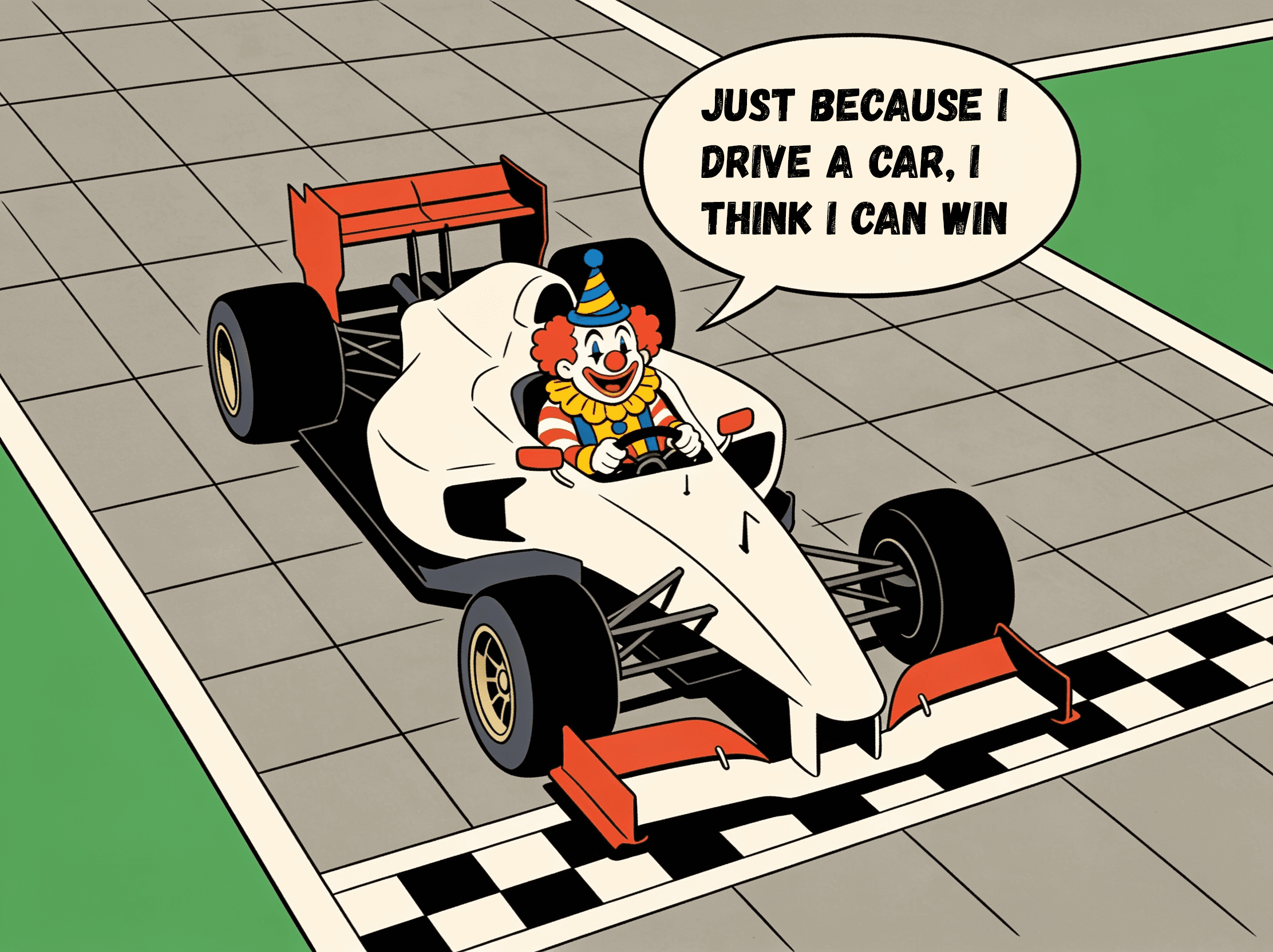
The "Syiok Sendiri" Delusion: You think you are better than designers because you use AI, but you are not even good at using AI. And FFS, 90% of you will not even watch your own slop if it was made by someone else.
The funny thing is, designers still use AI better than most of you. There is a specific, modern psychological phenomenon sweeping through the business world. In Malaysia, we call it the ultimate state of syiok sendiri—being completely full of yourself, entirely untethered from reality. It happens when a user types a rudimentary two-line prompt into an AI engine, receives a visually complex image or a grammatically perfect paragraph, and immediately assumes they have bypassed the need for creative professional studios.
They look at the screen, look at their subscription receipt, and think: "Why should I pay a studio when I am an elite creator myself?". In reality, all they have made is rubbish – luckily that rubbish matches the vibe of other rubbish out there, maybe that's why they think it's good.
Let's break this delusion down with an analogy
Imagine you go out and purchase a multi-million dollar, state-of-the-art, track-ready Formula 1 car. It is a masterpiece of precision engineering, aerodynamics, and raw power. You park it in your garage, sit in the cockpit, and put on the helmet. Does that make you an F1 driver? If we put you on a professional race track against an elite driver sitting inside a standard, entry-level hatchback, who wins?
The professional wins every single time, before you even navigate the first corner. Why? Because you don't understand apexes, weight distribution, track telemetry, or spatial physics. The car has immense potential, but you lack the trained intuition to exploit it.
And that's why you will never win a designer, especially a designer that can use AI.
AI Slop and The Universal Flattening of Creative Output
Everything is beginning to look identical. The layouts follow the same predictable grids. The copy utilizes the same corporate buzzwords. The visual art style has that distinct, plasticky, over-rendered AI sheen that audiences are already learning to revile.
Amateurs genuinely believe they are outsmarting established creative agencies, completely oblivious to the fact that professional studios spend decades mastering composition theory, color psychology, structural hierarchy, and cultural nuances. A tool cannot give you taste. A tool cannot teach you how to think critically. When an amateur uses AI, they produce high-volume slop. When a trained designer uses AI, they produce a masterpiece.
Announcing the Worksmint Academy (Finally We Have A Reason)
The world does not need more people who know how to generate generic templates. The world is drowning in them. That is precisely why we are launching the Worksmint Academy.
We are not building a course to teach you how to write basic prompts that any teenager can figure out in five minutes. This is an elite training ground for professionals, marketers, and creators who want to master true AI Orchestration, rooted deeply in design-first principles and creative rigor.
We are going to pull back the curtain on how a high-end studio actually utilizes advanced AI solutions to elevate creative work, maintain brand distinctiveness, and avoid the cringe-inducing output that floods the market daily.
Because as the internet fills up with automated noise, the brands that rely on amateur execution will completely vanish. The future belongs to those who know how to stand out—with the machine, or without it.